In the nation’s capital, we find plenty of restaurants, museums and people watching. Continue reading “Washington, D.C. ~ Portraits, Hoagies, Tacos, Indian food, Pub Grub”
Washington, D.C. ~ Portraits, Hoagies, Tacos, Indian food, Pub Grub

Eating And Traveling
In the nation’s capital, we find plenty of restaurants, museums and people watching. Continue reading “Washington, D.C. ~ Portraits, Hoagies, Tacos, Indian food, Pub Grub”
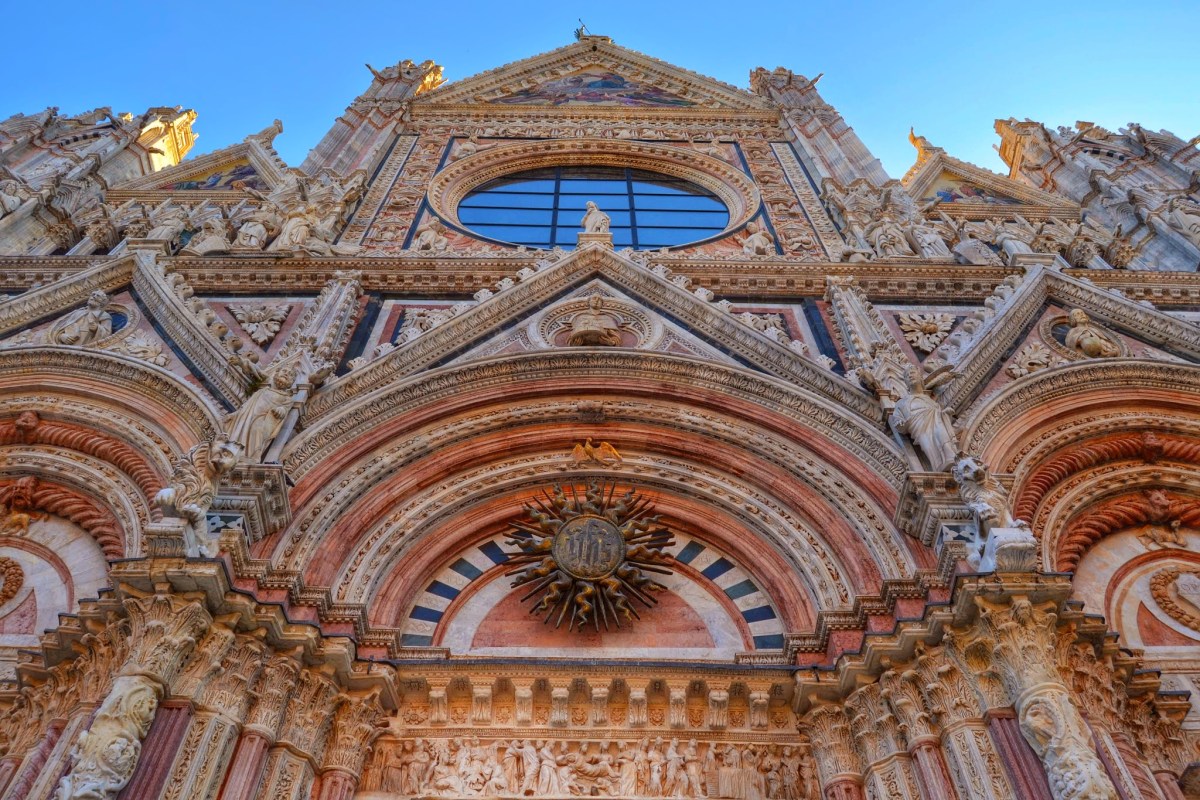
No matter your religion or beliefs, Jesus suffered that day. The Catholic Church will never let us forget it. When you walk into their relics of religion, the pain of his final day is prominent. Some people even wear the cross as a reminder of mortality and human sin. Continue reading “Italian Churches ~ The Power of Image”

My grandmother was the first one in her family born in America. The story goes like this: My great-grandfather, Dante, came to the U.S.A. with his family days before the stock market crash in 1929. A year later, my nonna, Elia, was born. The depression was terrible, the girls dropped out of school to work, boarders stayed at their house, but Dante stayed employed with tile and stone masonry. Life moves on, my grandfather met young Elia before he left for service in WWII, then returned safely, they married and had my father. My parents met in New Jersey, married and had me. The simple twists of fate align, but one part of it began here–in the mountains of Northern Italy–Poffabro. Continue reading “Poffabro ~ Origins of Me”

The mountains surround Udine in a massive embrace. They are pale gray in the day, and bluish in the setting sun. Jagged, steep and imposing are these baby Alps. The Dolomites are concentrated in a small corner of NE Italy. The people here speak Italian as well as the local Friulian dialect. The hearty local food aims to winterize your body with hefty portions of cheese, polenta, meat and wine. Continue reading “Laggio di Cadore ~ Into the Dolomiti”

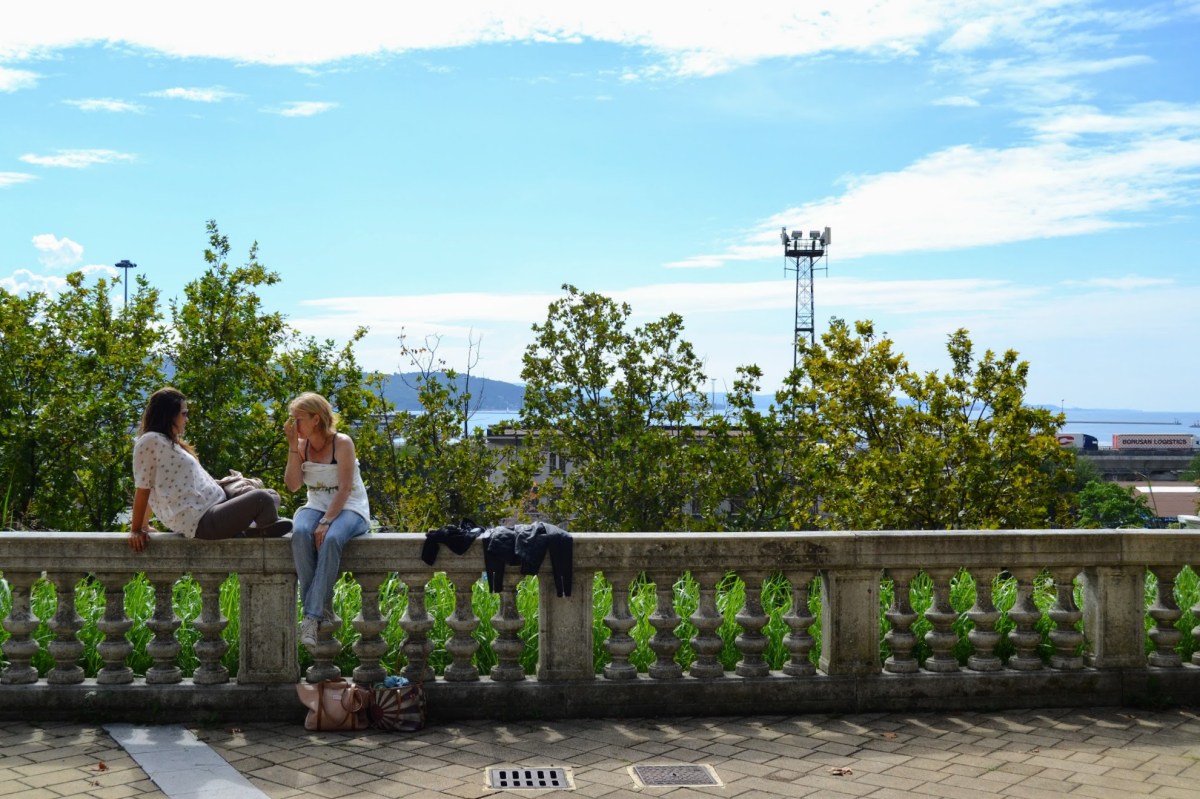
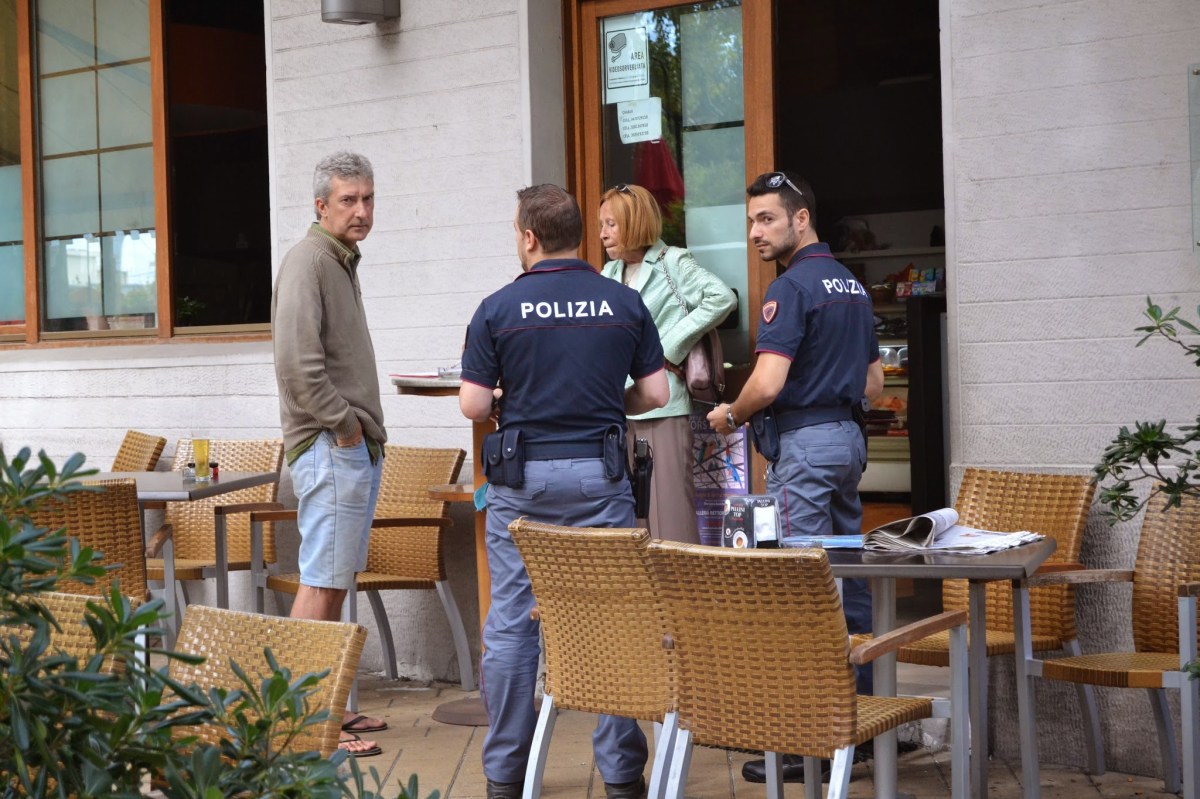
I moved to this strange border city without a true identity in July. The World Cup was coming to an end, but our classes were just starting. I spent the past two months here studying during the week and people watching during the weekend. I met the winds of “Bora.” I saw the Italian Renaissance piazzas, the Austro-Hungarian facades upon majestic buildings, the ancient Roman ruins sitting beside cafes melting into the local scenery, the ceaseless energy of the Mediterranean Sea lapping the giant stones of the Barcola, the dogs walking their owners before dinner, the fancy dressed Triestinos, the teenage wannabe punks, babies in strollers, pizzas on every corner, Chinese working the cheap stores, Africans hawking random junk, Indians selling flowers, and there I was, among them all. It is my favorite part of traveling…after eating of course! So, here are a few samples of local life.
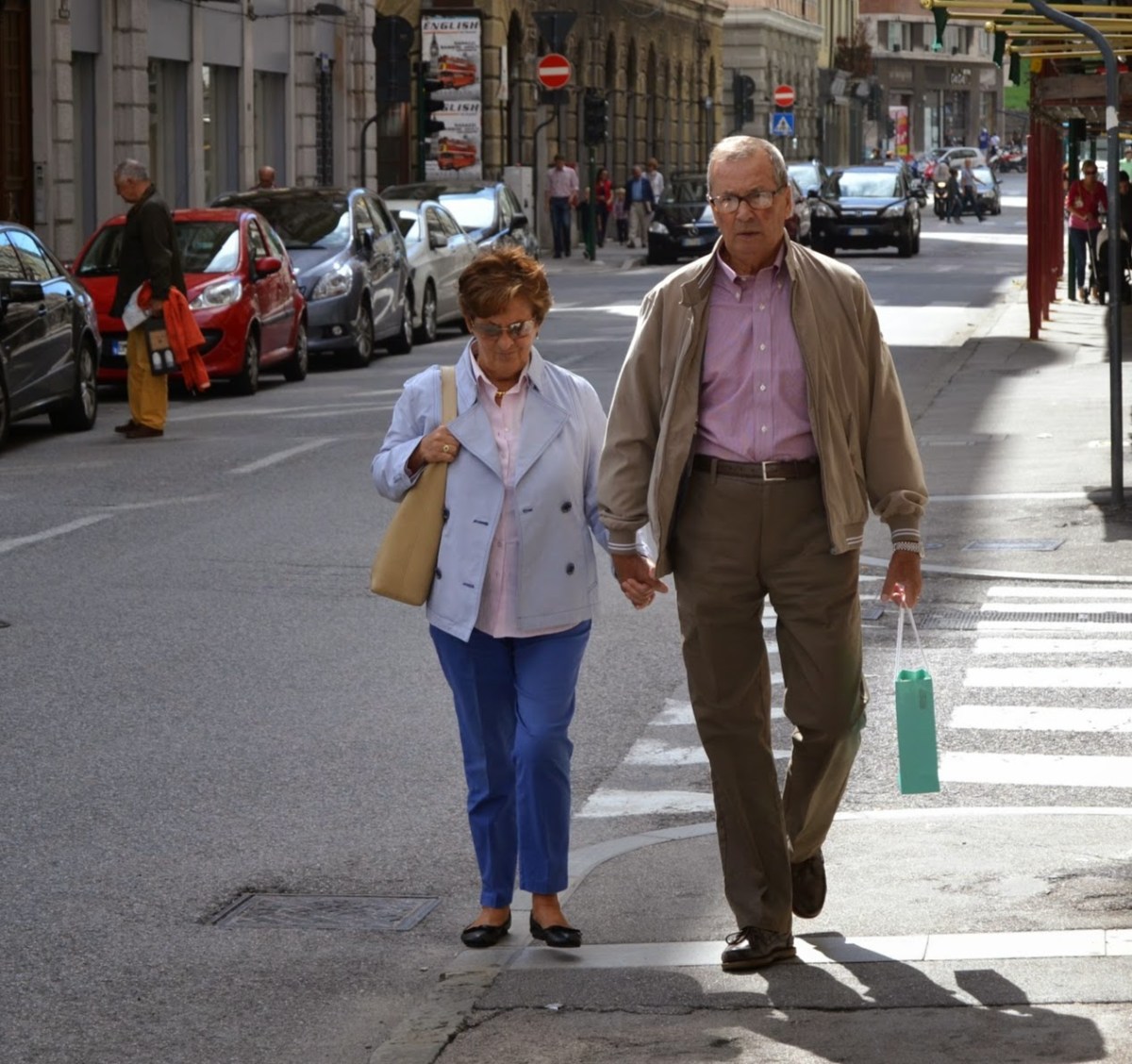
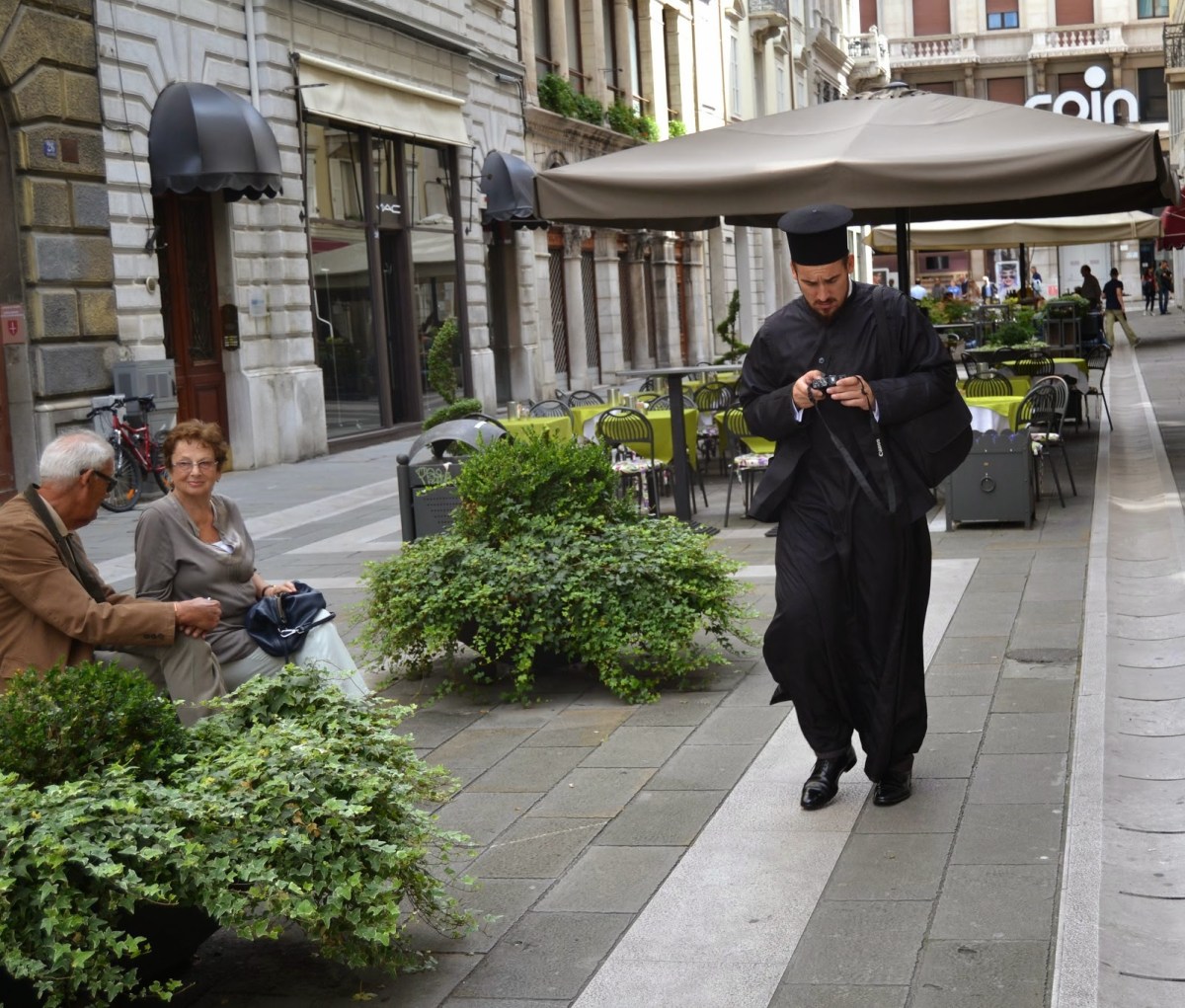


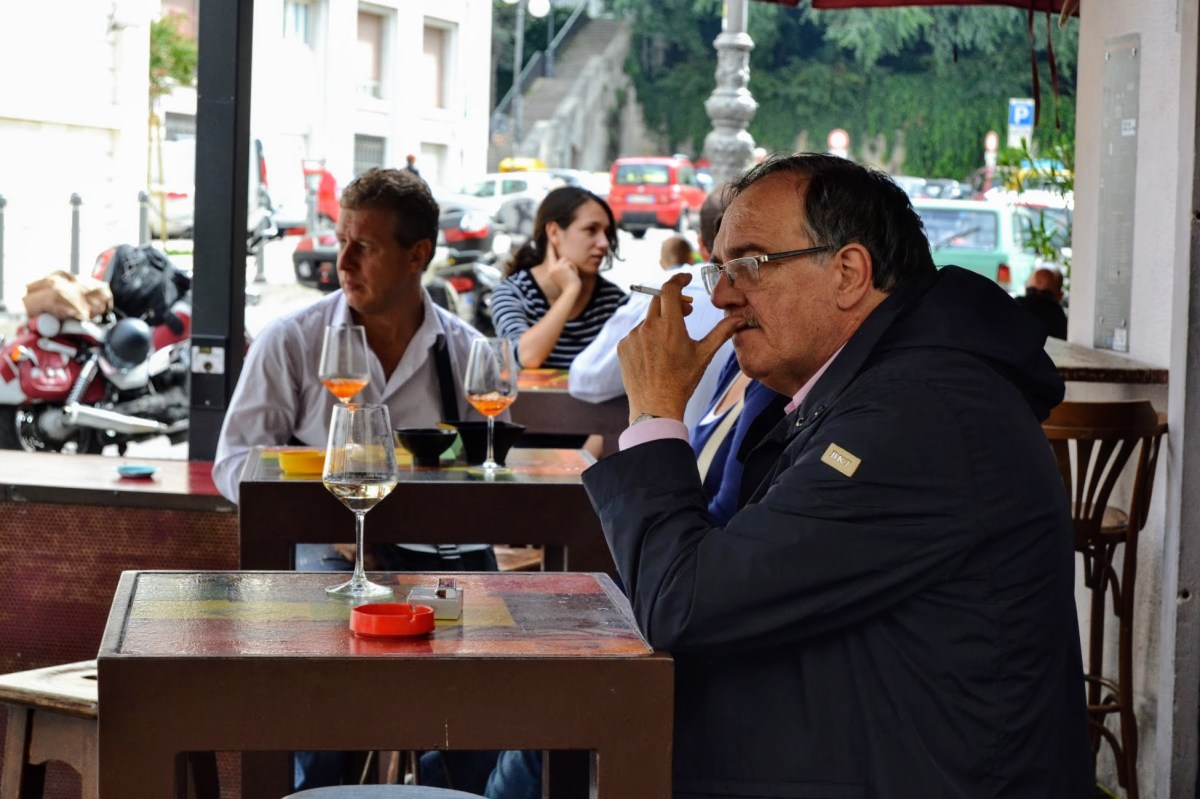



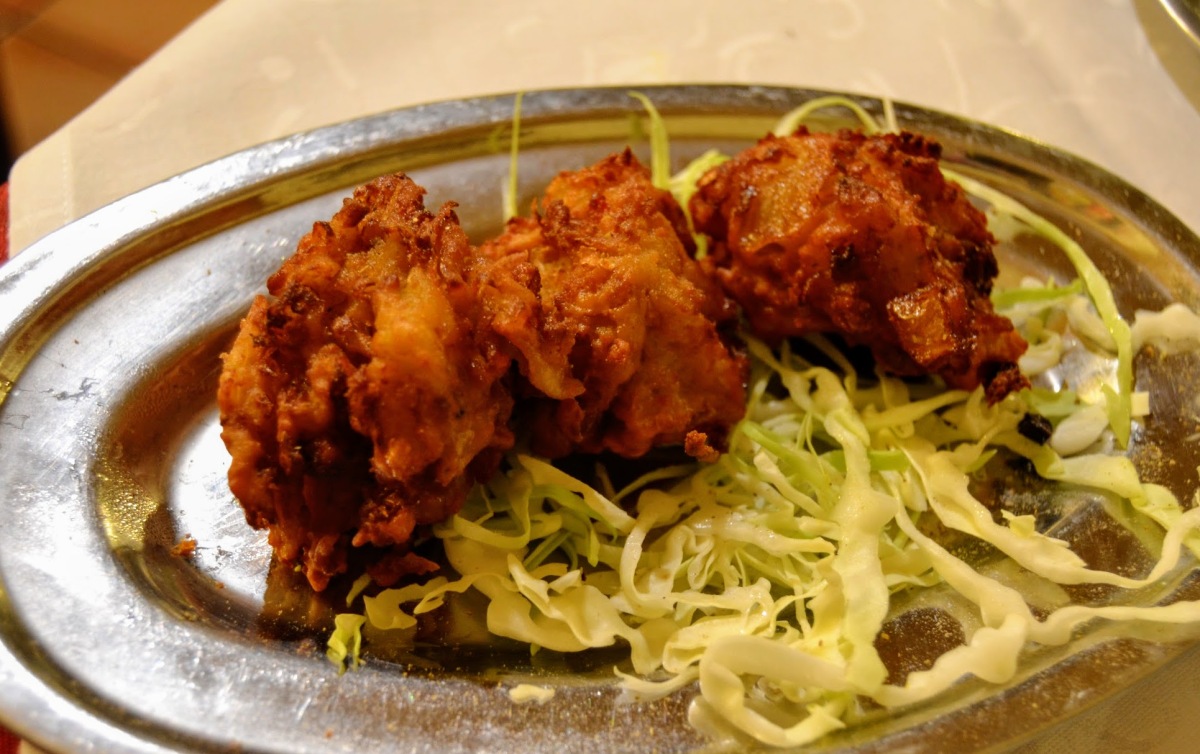
Oddly enough, I went with some Indian food for dinner. It was a nice place, full of Indian families with plates scattered about their tables and wonderfully decorated. I ordered samosas and curry chicken and it was all good.


Although Trieste doesn’t have a sandy beach, they do have hard paved stones on which to lie. It’s always crowded, and most people hang the whole day, and smartly bring a lounge chair. But first, I needed lunch. My roommate Marco and I headed to the city. We were headed to a strictly pork restaurant, but as they were closed for August break, we were now lost and hungry. We found an abandoned place and decided it was fine due to the high concentration of meat on the menu.
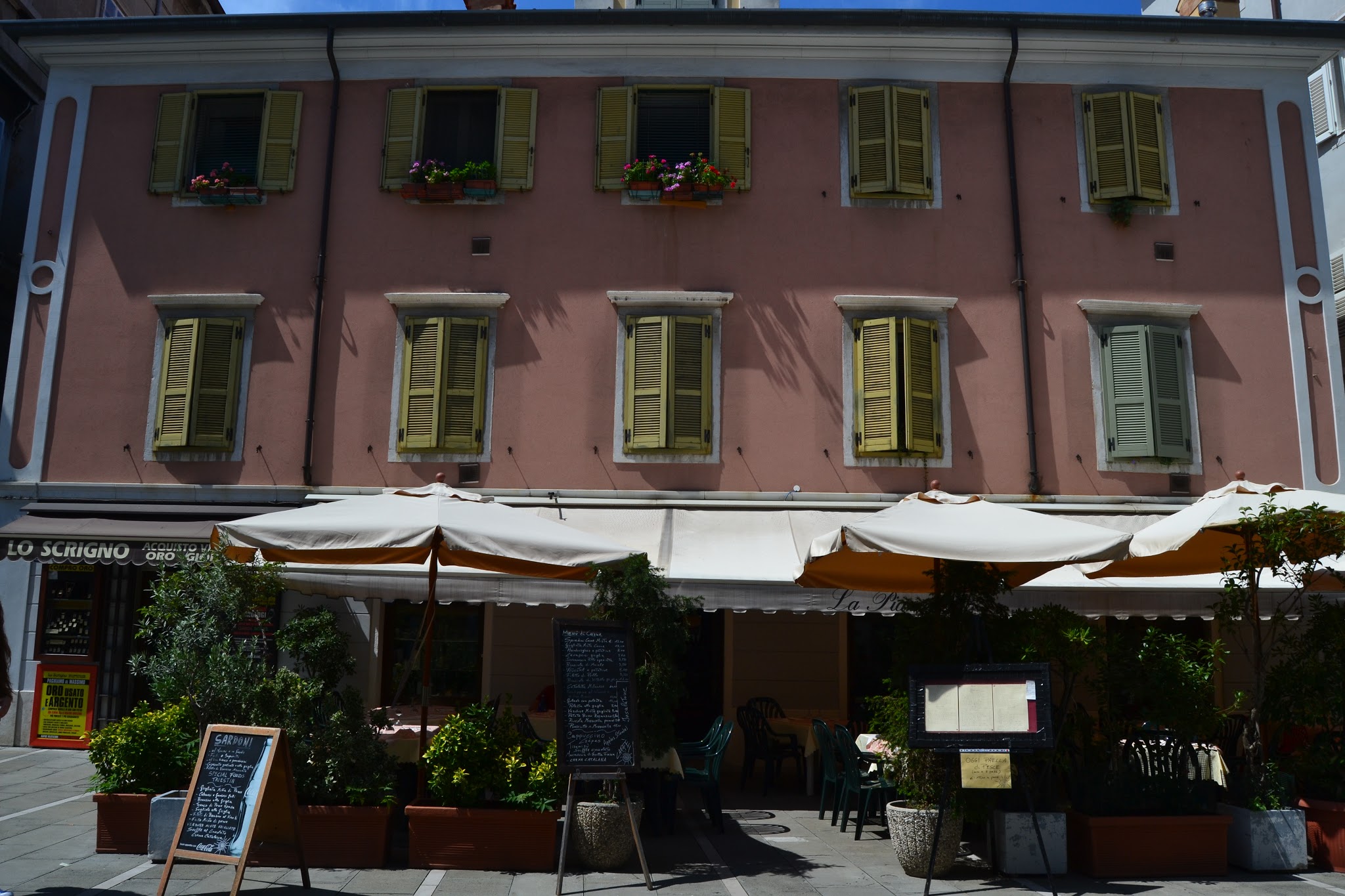
I ordered goulash with polenta. It was salty, but just what I wanted.

Next, we headed to our local, and deservedly famous gelateria, Zampolli’s.
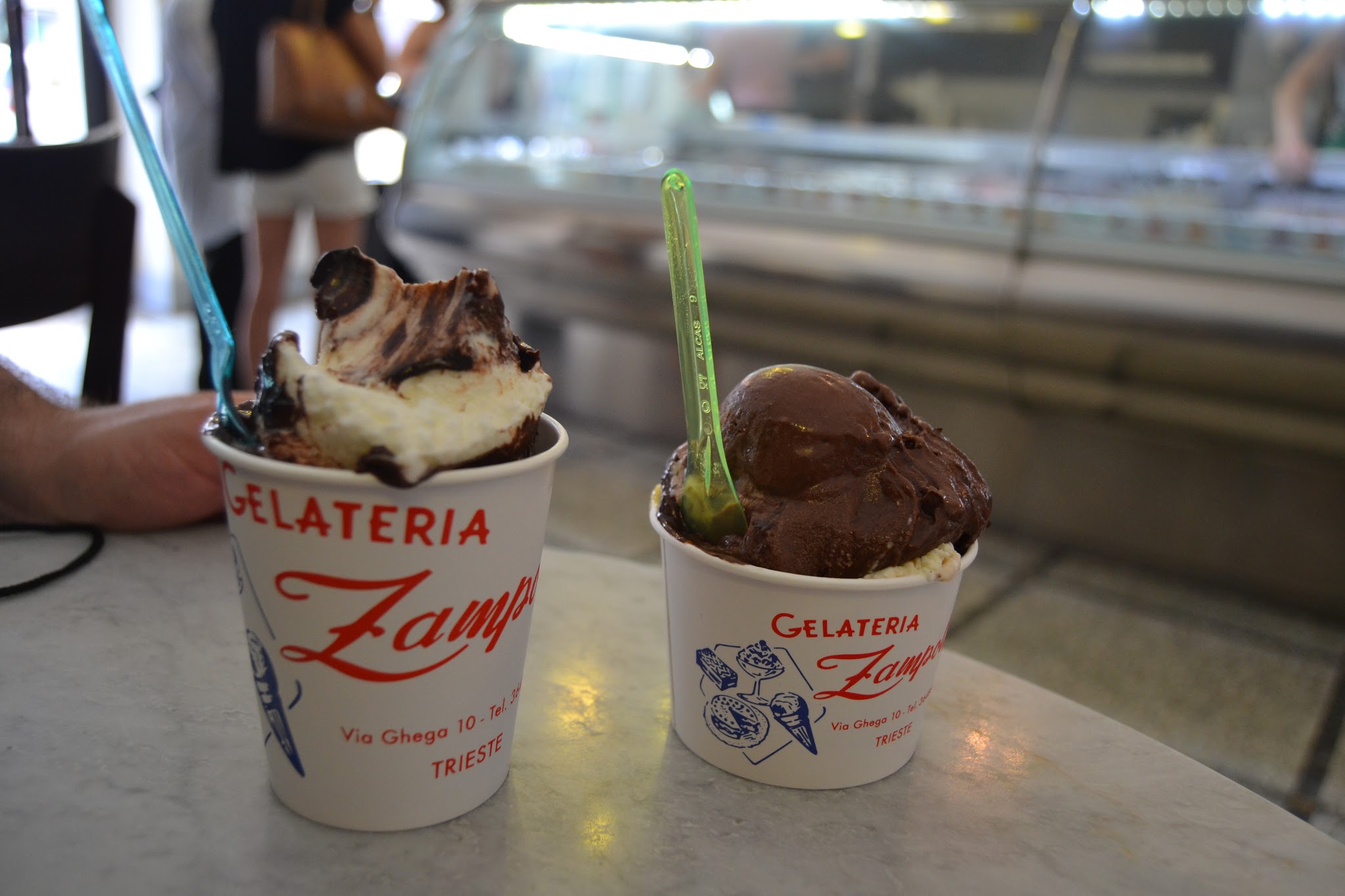
I had the smaller one, tiramisu with chocolate truffle; he had a triple scoop of nero e bianco and his favorite–dark chocolate without milk…basically looks like tar, but tastes better.
He took a nap and did some work, I went to the “beach.”

It’s a flesh party with little room to yourself, but once you jump past the jagged rocks that lead to the water, it’s perfect swimming conditions. Of course, you have the classic stereotypes, speedos…

gelato from a truck…

cool guys playing guitar and smoking…

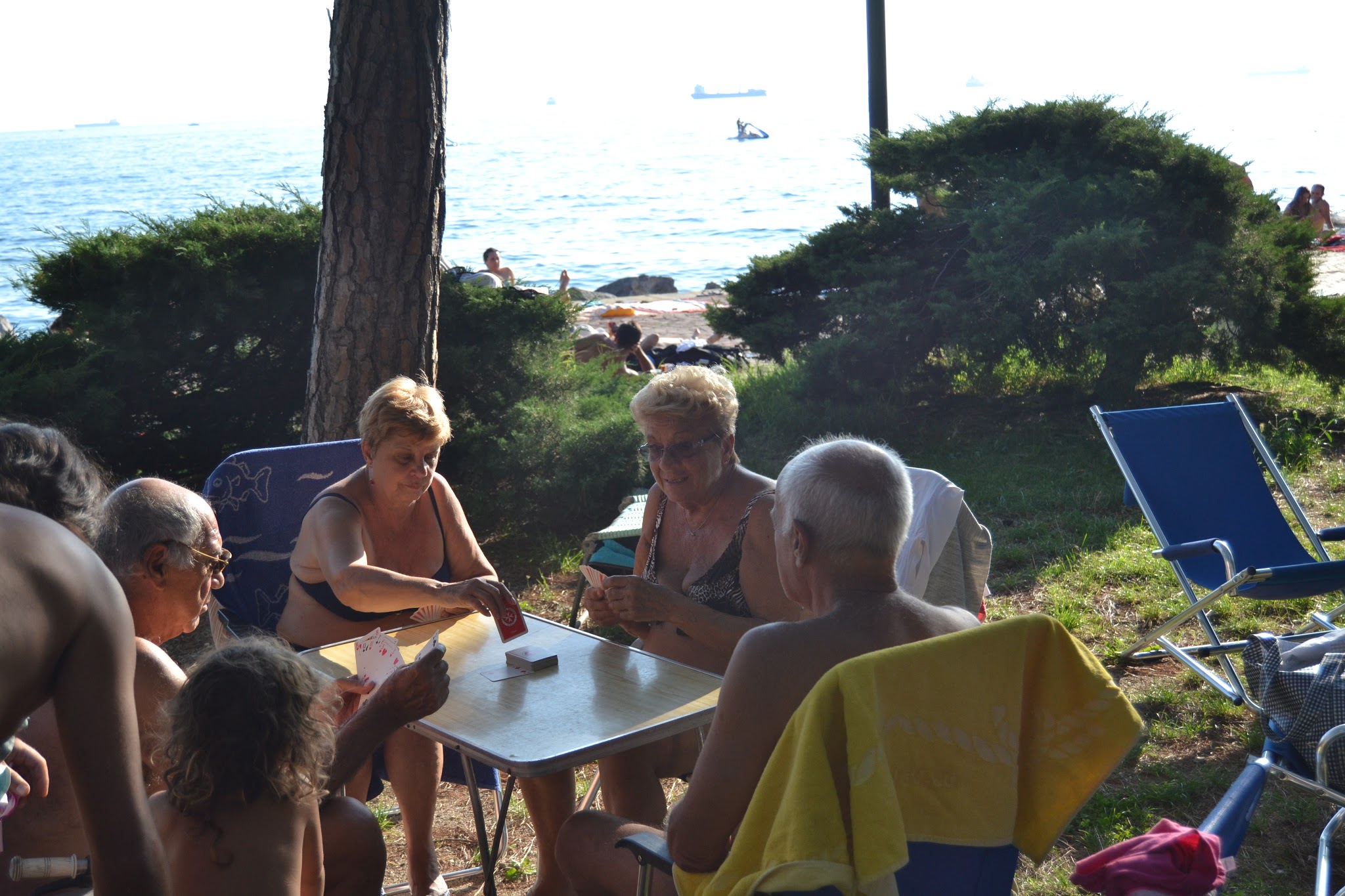
old people playing cards in the shade while admonishing the youngsters…
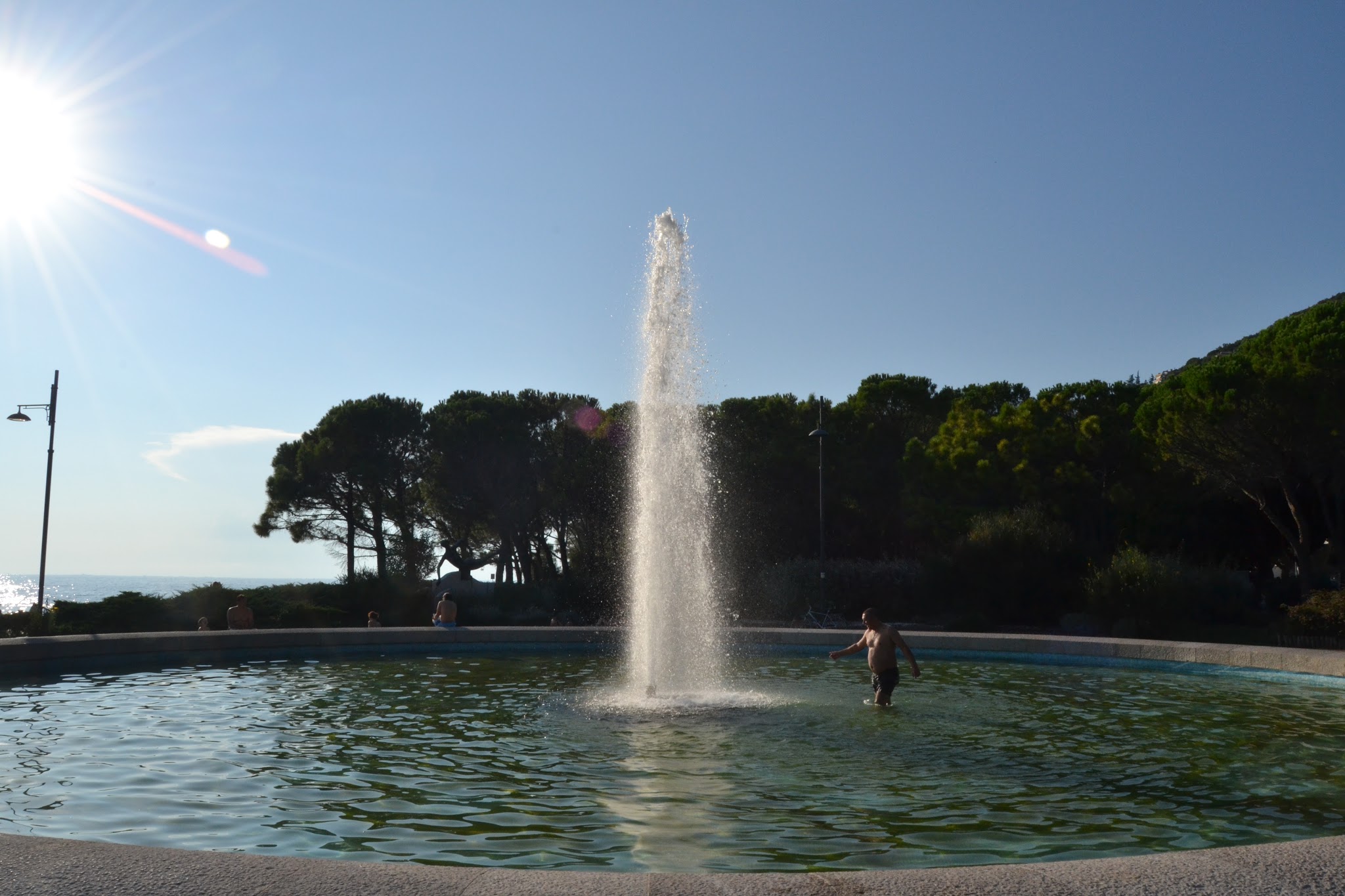
and fat guys swimming in the fountain…
It’s a helluva town. I walked the hour back to my apartment because the buses were chock-a-block. I bought a big beer for 1euro and sang the whole way home with the rhythm of my flip flops keeping time.
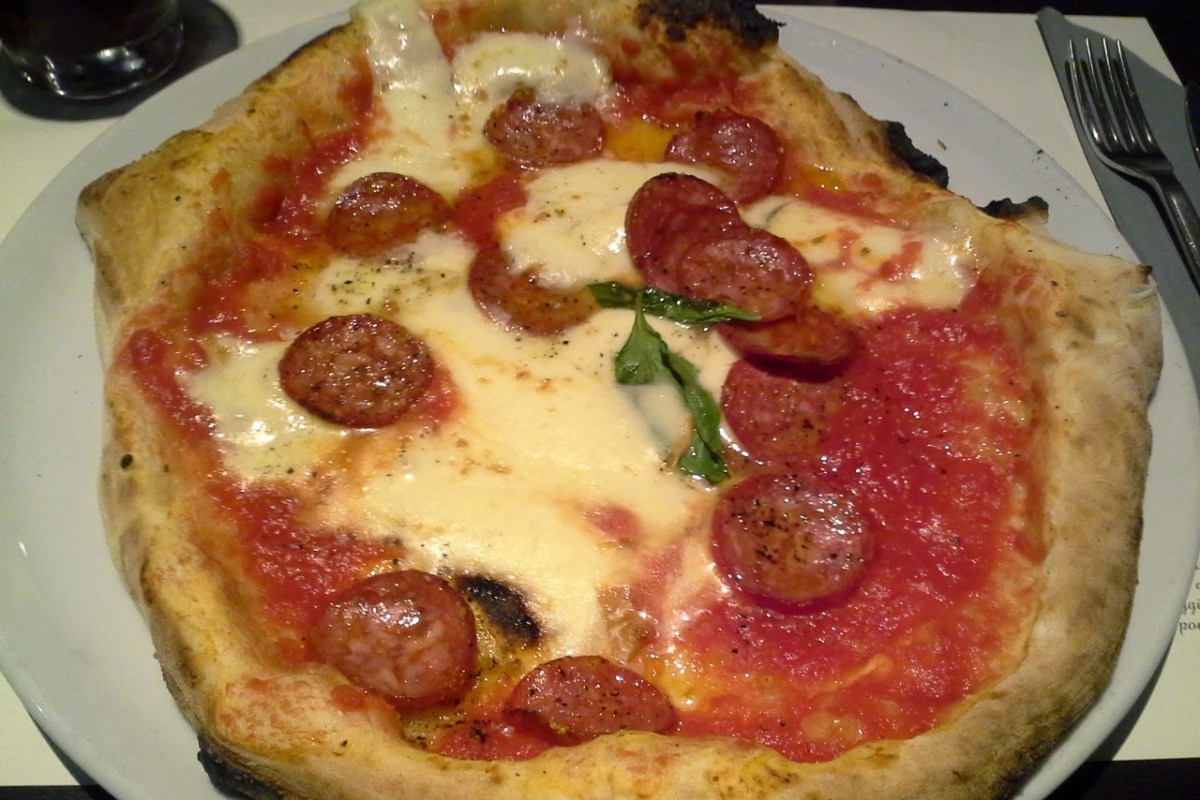
I joined a gym; it’s next to a pizza place…that works for me. When I say “next to” I mean they share a patio. You can be doing chest presses while seeing cheese pull away from a drooling mouth on the other side of a translucent piece of plastic curtain. The smell is wonderful, and it’s like a motivator–“work hard so you can enjoy that pizza another day.” The gym is cool, high ceilings, clean machines, naked pictures of hot chicks on the wall, Rocky Balboa posters and an open air patio with free-weights. And that open air patio is the shared space with Peperino Pizza (Via Del Coroneo 9). It’s a Neapolitan style place. Burnt sections of thick, chewy crust, large dollops of fresh bufala mozzarella, and ripe tomatoes. I’ve eaten here a few times (sure to grow into more, as I learned the pretty camariera’s name (Anita) and its proximity to my gym)), and its only disappointment is the lack of meat available on the pies. Despite the missing carne, I’ll be back.
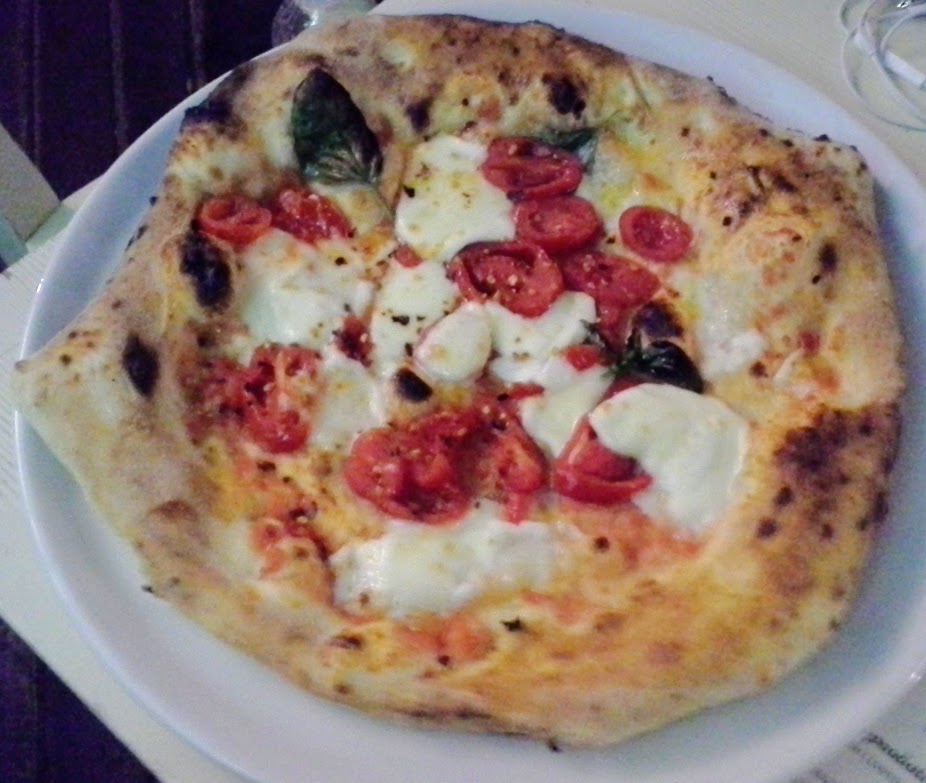


The first picture is the classic Margherita, second is a gem of truffle sauce with San Daniele prosciutto (one of the only meat offerings), and third is the jovial chef…
Via del Coroneo, 19, 34133

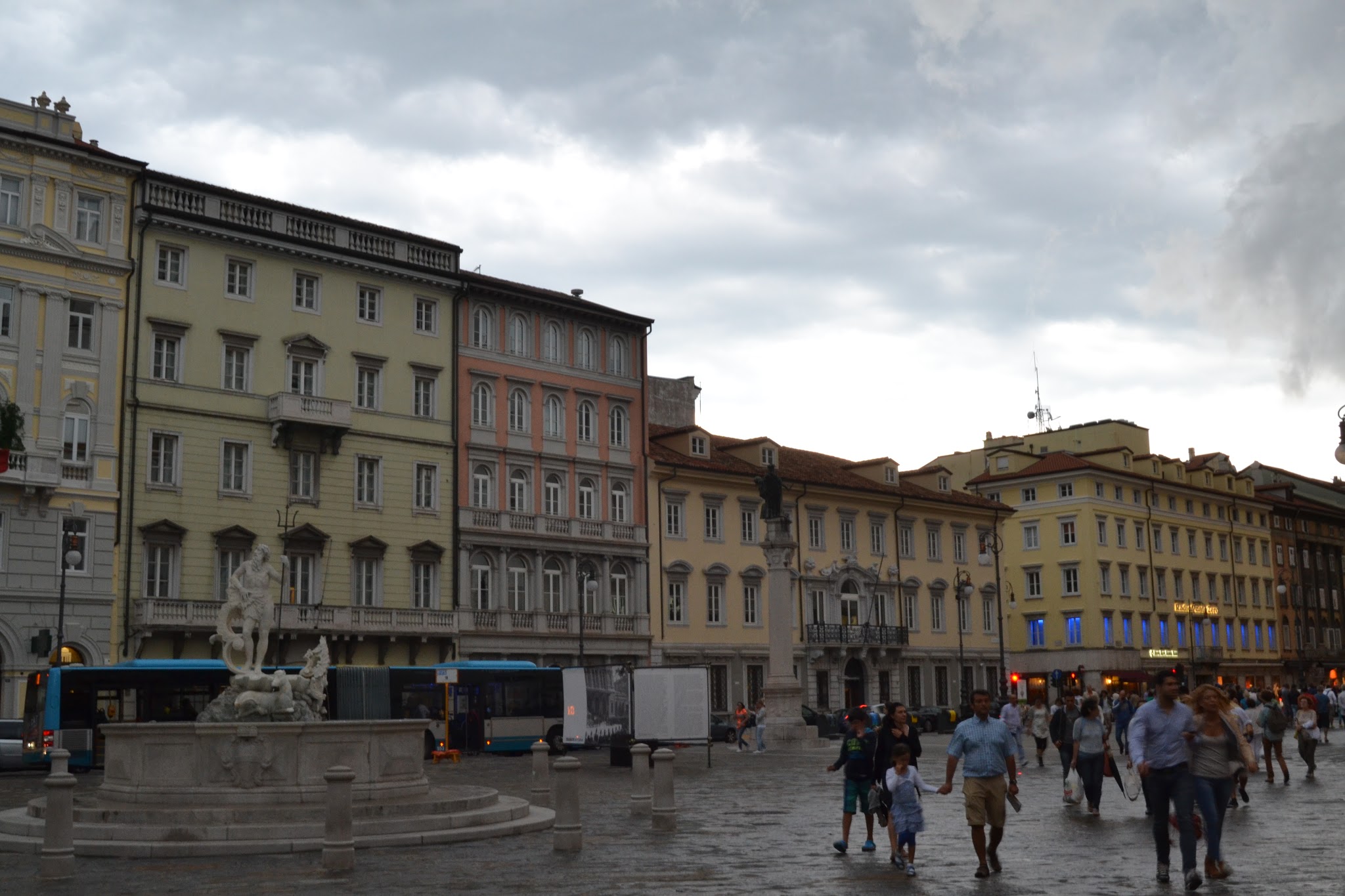
Our professor took us on a historical trip through his city of Trieste last Saturday. We began at 8 in the morning and finished at 8 at night, huddled inside a Serbian Orthodox church with rain battering the stone ceiling and lightning flashing outside the stained glass. By the end, my ankles were ruined, feet stinky as a wet dog, and heart bursting with the pain of history and beauty of the present. We began in Piazza Oberdan.

The building is an outstanding example of attention to detail on a neoclassical design. It is actually about 50 meters from my apartment and the winged lion and ancient stones are always a pleasure to pass on the way to the crowded bus.
Next, we made our way to the famous castle of the tragically fated, Maximillian I of Austria. He moved to Mexico in 1864 in an attempt to rule as Emperor. The Mexicans weren’t as impressed by his beard as I am, and killed him three years later. Nevertheless, the beautiful white castle he had built before he left still stands astride the waters of the Adriatic.


We spent two hours with an Italian tour guide who explained EVERY inch of the place, perhaps not understanding my vexation bordering on contempt of king worship. Of course, it was beautiful, and that’s what you get when construction workers’ lives depend on creating masterpieces.
After a long traffic jam along the waterside, we made it to lunch at Ristorante Marina San Giusto. It was a perfect place. The chilly Bora winds had just started blowing, kicking up the water to appear as angry white topped waves. We ate a communal lunch of spinach gnocchi, fried calamari and squash, watermelon, wine and an espresso to help digest.


Full of fried goodness, we ambled over to Il Piccolo, the local newspaper. It smelled like cigarettes and information inside. There wasn’t much work happening, as it was after lunch at an Italian newspaper.


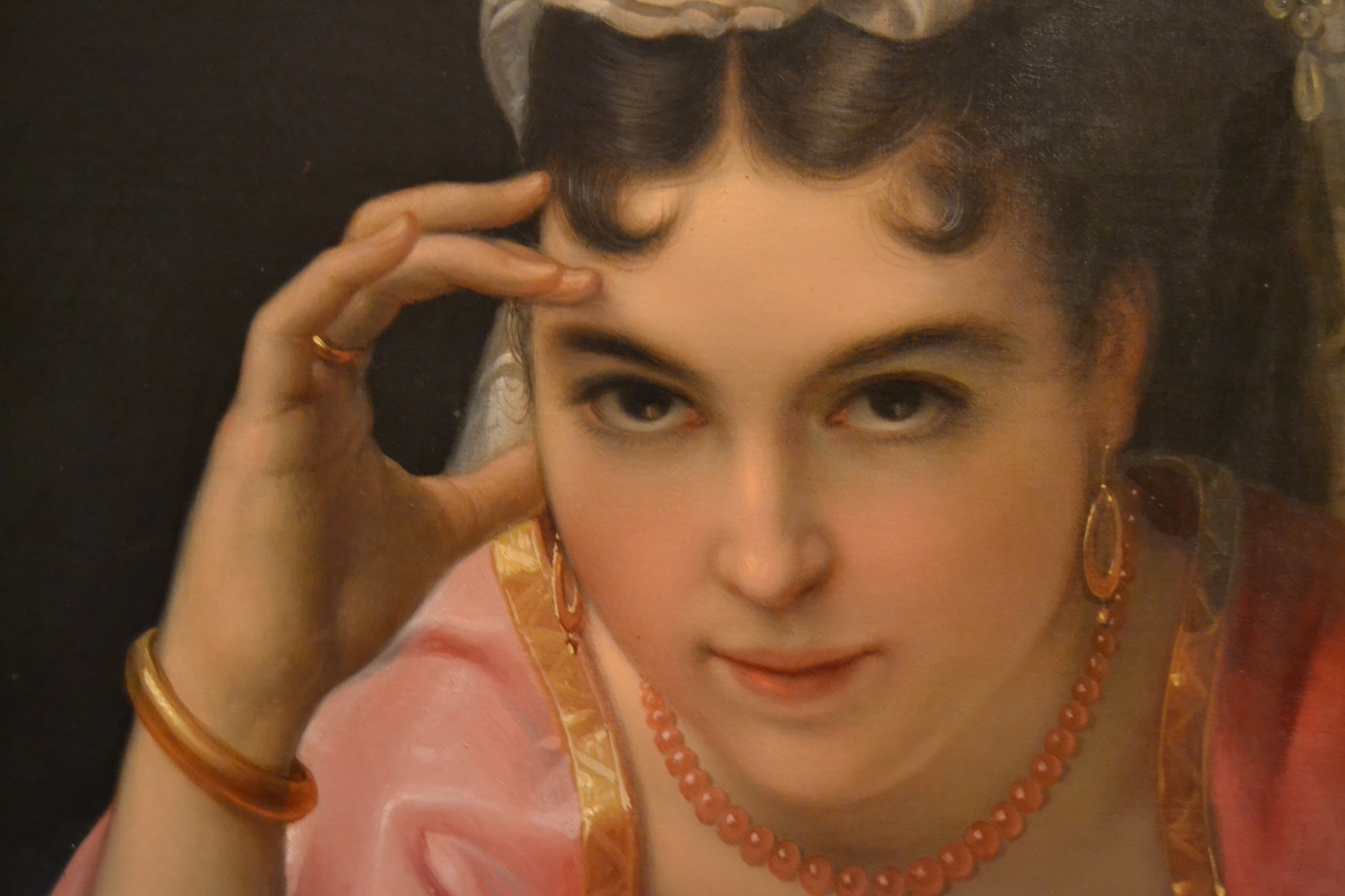
We ate a small gelato, and went to the amazing Museo Revoltella, a former house of the distinguished lady killer known as Barone Pasquale Revoltella. We were losing daylight now, and had to rush through the five floors of brilliance. I took lots of photos inside, but these are my favorites.



Next, we hit up the major churches of the hillsides.

There are also some scattered Roman ruins, some houses built right into the arches and pillars. This is a beautiful mosaic from Cathedral San Giusto.


Mercifully, (to my knees and ankles) we finished as dusk approached. We had seen a large chunk of this crossroads town. It was the port of Vienna for years, a competitor to Venice’s might, set within the Roman, Byzantine, Ottoman and Yugoslav borders, and finally returned to Italy in 1954. It retains much of the former inhabitants’ energy and style. But now, it is fully Italian, albeit with lots of Austrian pork, Slovenian beer and Croatian tourists.

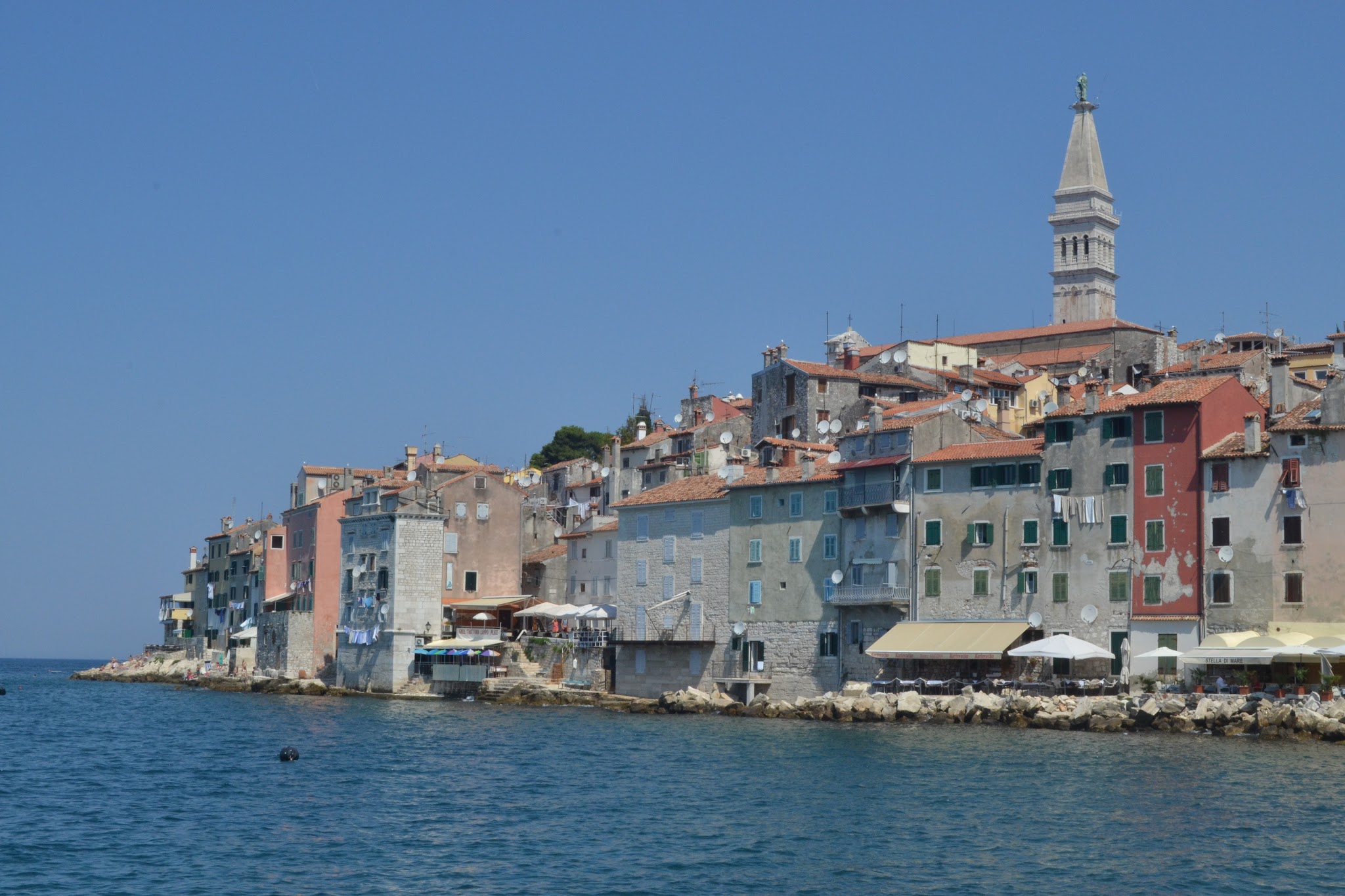
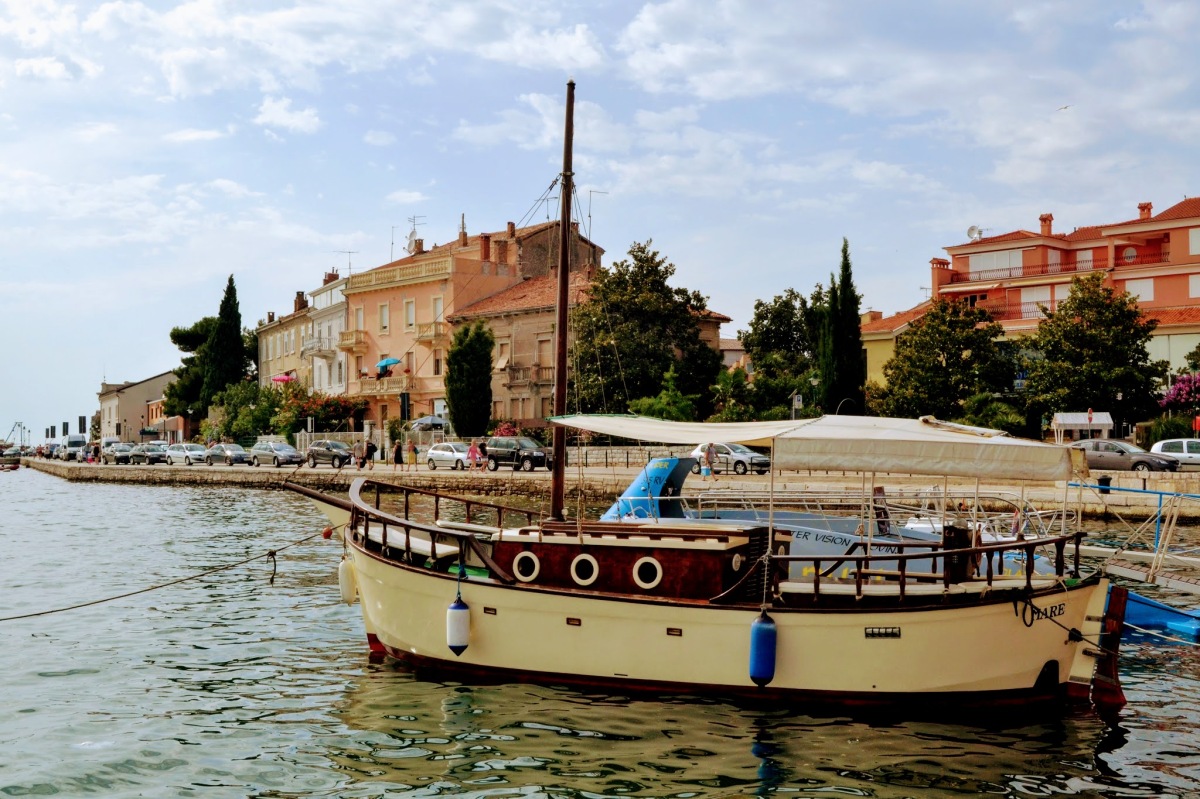

An ancient church rests on the lonely hill, looking out upon the blue waters of the Adriatic. Crumbling stucco houses among the slippery streets of worn away stones. Flowerpots falling over shuttered balconies and laundry hanging to dry in the afternoon sun. It’s the classic romance of a Mediterranean coastline. We arrived via ferry from Trieste, Italy and immediately found lovely apartment accommodation with some convenient bargaining in Italian. The beaches are more pavement and rock than soft sand, but the crystal water makes up for any lack of horizontal comfort. We made a family lunch with various meats and delicious Croatian beer.

Such a quaint little big city must be full of quaint little houses, and these are the few I saw before the sun set.

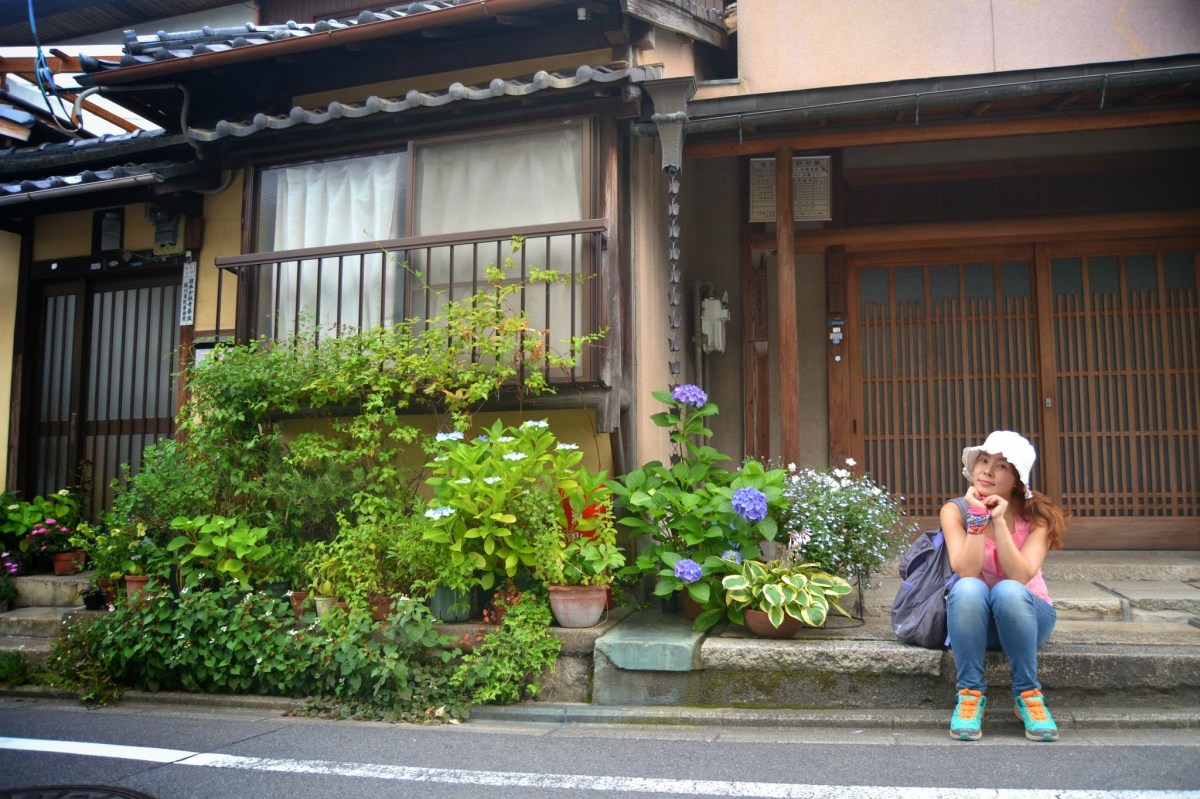

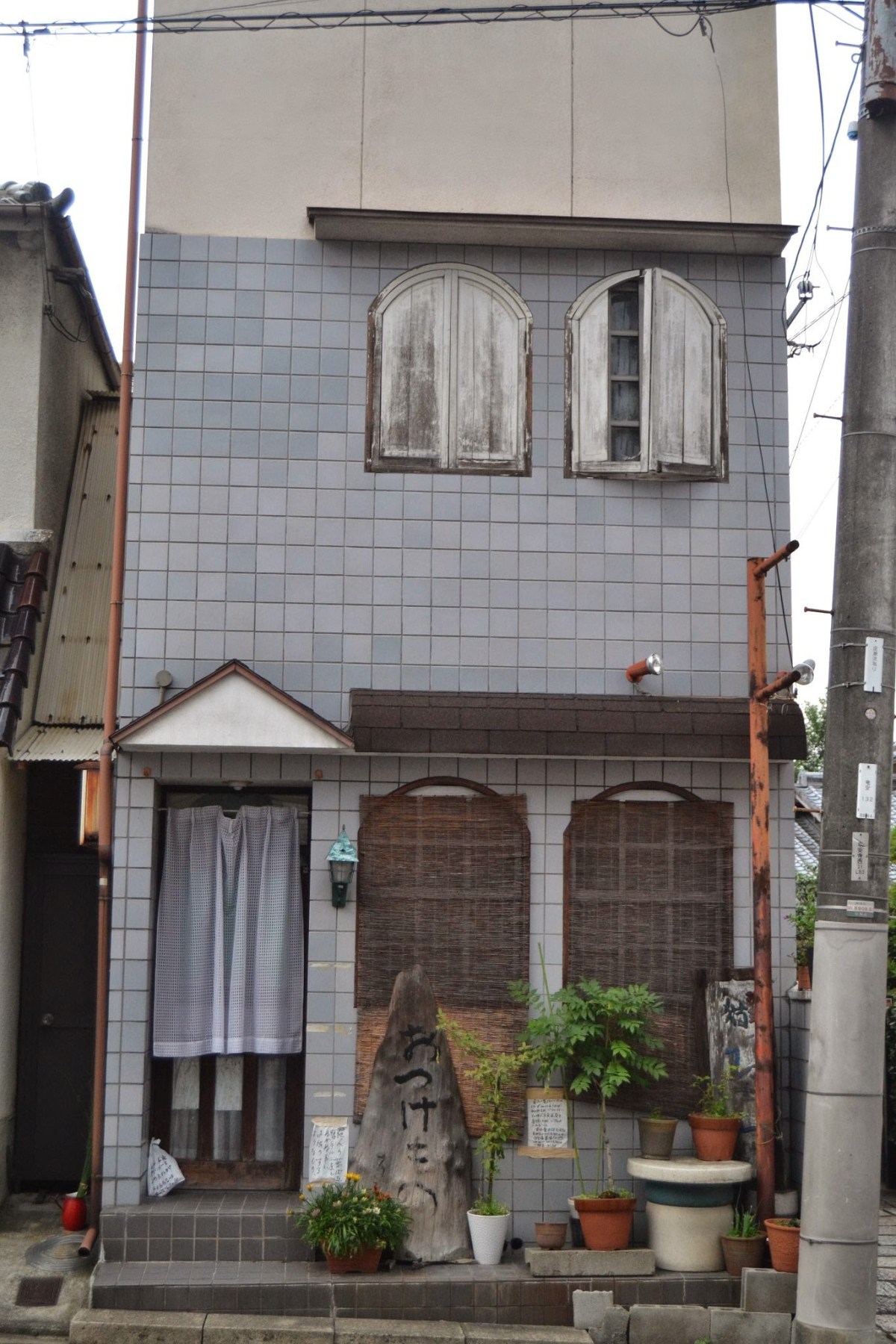

 E.A.T.